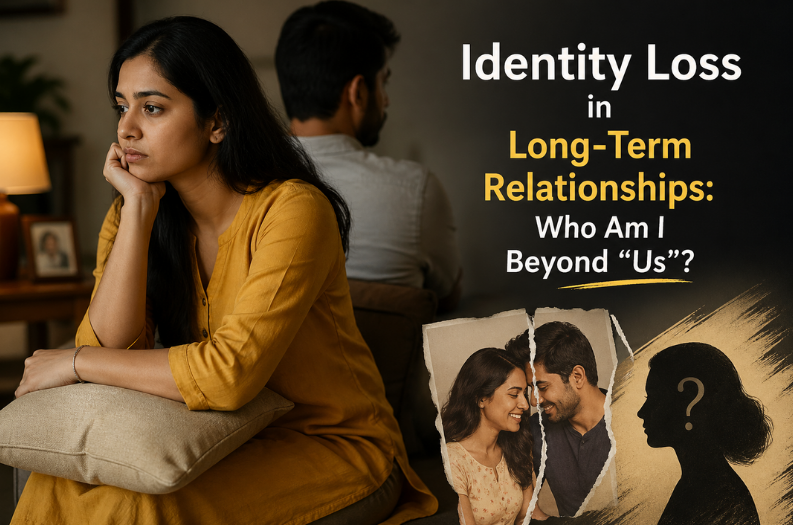
When “We” Slowly Replaces “Me”
Long-term relationships are built on togetherness, shared goals, shared responsibilities, shared futures.
But sometimes, somewhere along the way, the “we” becomes so dominant that the “me” quietly fades.
You prioritize harmony over authenticity.
You adjust your preferences to avoid conflict.
You introduce yourself as someone’s partner before remembering who you are as an individual.
This is identity loss in long-term relationships, a psychological experience where personal identity becomes overly fused with the partnership.
And research shows it’s more common than we think.
What Research Says About Identity in Relationships
Psychologist Arthur Aron’s Self-Expansion Theory (1991) suggests that healthy relationships allow individuals to expand their identity, not lose it. In secure bonds, partners grow while maintaining individuality.
However, when relationships become enmeshed or codependent, the opposite happens: identity constricts instead of expands.
Studies in relational psychology also highlight that women disproportionately perform emotional labor (Hochschild, 1983) the invisible work of managing emotions, maintaining harmony, anticipating needs. Over time, chronic emotional labor can shift self-worth from “Who am I?” to “How well do I care for others?”
In simple terms:
When your identity revolves entirely around the relationship, your internal stability becomes fragile.
How Identity Dissolves Over Time
Identity loss doesn’t happen dramatically. It happens quietly through:
- Constant compromise without reflection
- Prioritizing others’ needs over personal desires
- Avoiding conflict to maintain peace
- Reducing friendships or hobbies
- Internalizing societal or cultural expectations of sacrifice
You begin measuring your value by how stable the relationship feels.
Your dreams become negotiable.
Your boundaries soften.
Your ambitions feel selfish.
And eventually, a painful question surfaces:
If this relationship changes or ends… who am I?
The Psychological Impact of Losing Selfhood
When personal identity becomes overly fused with a partner, several emotional patterns emerge:
- Increased anxiety and fear of abandonment
- Low self-worth tied to relational approval
- Difficulty making independent decisions
- Emotional burnout from chronic caregiving
- Resentment that feels confusing or guilt-inducing
Healthy intimacy requires both connection and differentiation.
Without differentiation, love begins to feel like an obligation.
Why Women and Caregiving Partners Are More Vulnerable
In many cultures, women are socialized to prioritize relational harmony over self-expression.
From a young age, they are praised for being:
- Adjusting
- Understanding
- Sacrificing
- Emotionally available
Over time, identity becomes role-based:
Wife. Mother. Daughter-in-law. Support system.
But roles are not the same as identity.
When identity becomes entirely role-driven, burnout and quiet resentment often follow.
Reclaiming Your Identity Without Destroying the Relationship
Reclaiming selfhood does not mean abandoning love. It means restoring balance.
Here’s how to begin:
1. Reconnect With Individual Preferences
Ask yourself:
What do I enjoy independent of my partner?
What values define me?
Start small — music, hobbies, friendships, opinions.
2. Strengthen Boundaries
Healthy boundaries are not rejection. They are clarity.
Practice saying:
“I need time for myself.”
“This is important to me.”
“I see it differently.”
Autonomy strengthens intimacy when communicated respectfully.
3. Reduce Emotional Over-Functioning
If you are constantly regulating the emotional climate of the relationship, pause.
Not every silence needs fixing.
Not every discomfort needs managing.
Let responsibility become mutual.
4. Seek Therapy for Identity Reinforcement
Therapy can help rebuild self-concept clarity, unpack codependent patterns, and restore emotional independence without dismantling commitment.
Identity restoration is not rebellion. It is psychological stability.
To-Do: If You Feel You’ve Lost Yourself
- Journal about who you were before the relationship.
- Reintroduce one independent activity weekly.
- Rebuild or maintain friendships outside the partnership.
- Notice where you over-function emotionally.
- Practice expressing one authentic opinion daily.
Small acts of differentiation rebuild selfhood.
Q & A
Q1: Is it normal to lose yourself in a long-term relationship?
Temporary over-identification can happen during major life transitions (marriage, motherhood, relocation). But chronic identity loss and emotional suppression are signs that individuation needs attention.
Q2: Is identity loss the same as codependency?
Not always. But prolonged identity fusion, fear of independence, and emotional over-functioning are core traits of codependent dynamics.
Q3: Can I reclaim my identity without harming my relationship?
Yes. Research on differentiation shows that relationships actually improve when both partners maintain individuality. Healthy intimacy thrives on two whole individuals, not emotional merging.
Q4: Why do I feel guilty prioritizing myself?
Because many people, especially women, are conditioned to equate self-sacrifice with love. But sustainable relationships require mutual emotional responsibility, not one-sided caregiving.